
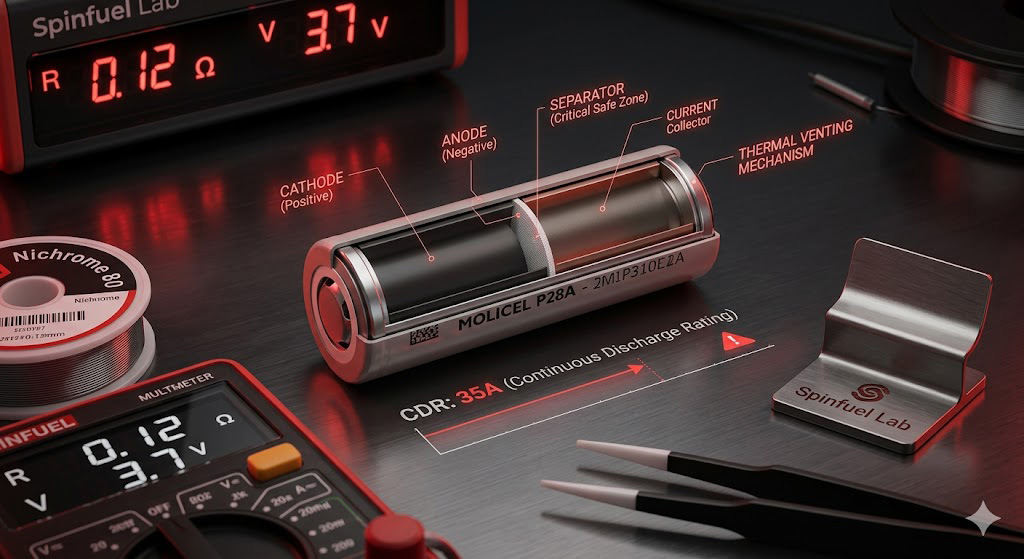
Spinfuel Lab Safety Reference
Removable lithium-ion batteries can cause fire, burns, or serious injury if they are damaged, misused, or charged improperly. This page provides general safety information for adult vapers. It does not replace the instructions supplied with a device, charger, or battery.
Battery safety should be treated as part of ordinary device ownership, not as an advanced hobby. A battery that looks small can still store a meaningful amount of energy. The safest habit is simple: use only equipment your device maker supports, inspect it before use, and stop when something does not look or feel right.
Choose the right battery for the device
Use the battery type, size, and configuration specified by the maker of your device. Do not substitute an unfamiliar cell because it fits physically, and do not rely on marketing language or oversized performance claims. Purchase from reputable sources, retain the original packaging when practical, and follow the maker’s instructions rather than an online shortcut.
Inspect before every use
A battery should be clean, dry, and free of visible damage. Do not use a cell with a torn wrap, damaged insulating ring, dents, swelling, leaks, corrosion, an unusual odor, or signs of overheating. Never try to tape, modify, or otherwise improvise a repair. Set a questionable battery aside and replace it through an appropriate source.
Charge with attention
Use the charging method recommended for your particular device. Charge on a stable, nonflammable surface where you can notice a problem, and keep the device away from bedding, paper, heat, and direct sunlight. Do not charge a device or loose cell that is hot, wet, damaged, or behaving unpredictably. If charging produces excessive heat, an odor, a leak, or an error message, disconnect it if it is safe to do so and stop using the equipment.
Carry and store batteries safely
Never carry loose batteries in a pocket, bag, car console, or drawer where they can contact keys, coins, tools, or other metal objects. A purpose-made protective case helps prevent accidental contact and physical damage. Store batteries in a cool, dry place, away from children and from anything flammable. For multi-battery devices, use matching cells as the device maker directs and keep their use consistent.
Know when to stop
Unexpected heat is a warning, not a nuisance to work around. Stop using a battery or device if it becomes unusually hot, vents, hisses, smells unusual, leaks, swells, or shows visible damage. Do not continue testing it, do not take it apart, and do not attempt a home repair. Follow local guidance for handling and recycling damaged lithium-ion batteries.
Avoid improvised technical setups
Mechanical devices, altered equipment, and self-built coil systems introduce risks that cannot be addressed by a generic article. Spinfuel does not provide resistance targets, current calculations, battery-pairing recipes, or step-by-step build instructions. If a setup depends on those decisions, use the device manufacturer’s documentation or seek qualified, in-person technical support before using it.
The Spinfuel standard
Good battery practice is conservative by design: compatible equipment, careful handling, active charging, and no guesswork when something seems wrong. That is not a limitation on vaping. It is the basic discipline that lets adult users keep safety ahead of convenience.
Revised September 2026 to prioritize general, current battery-safety guidance and remove prescriptive build advice.