Many who navigate the world of cannabis are familiar with the ongoing debates surrounding Delta-8 THC. However, newcomers often find themselves confused, frequently comparing CBD with Delta-8 and assuming they are the same. While experts know CBD doesn’t produce psychoactive effects and Delta-8 does, this article will delve deeper into a comprehensive comparison, covering various aspects of both cannabinoids.
First, let’s dive in to the comparison study focus.
What is Delta 8?
Delta-8 THC is a cannabinoid found in Cannabis Sativa plants, and it’s a more recently identified cannabinoid. Consequently, it is not as widely recognized as other THC variants and is typically used in smaller quantities. Compared to Delta-9, it is currently less researched, and a comprehensive list of its benefits and effects is still being developed. It is found in trace amounts, making it a minor cannabinoid. Only small quantities can be naturally extracted from a hemp plant. While hemp-derived products are broadly legal, Delta-8’s legality remains contested in some states. It is derived from hemp-based CBD, which is a plus point.
The legality of Delta-8 is still being debated at the federal level, placing it in a regulatory grey area. If you consider using a Delta-8 product, it is essential to check your state’s regulations first and consult an authorized healthcare provider regarding its safety and suitability. Always ensure you source products from a reputable supplier to guarantee safety and quality.
What is CBD?
CBD is generally known and abbreviated as cannabidiol. It is one of the most prevalent compounds found in hemp plants. It has gained popularity as a natural treatment for various ailments and concerns. CBD derived from hemp contains minimal amounts of THC, whereas CBD from marijuana may have higher THC levels. The primary benefit of CBD is that it doesn’t cause a “high” by itself. Researchers suggest that CBD generally exhibits no adverse effects, and there is no evidence of significant public health-related issues associated with using pure CBD.
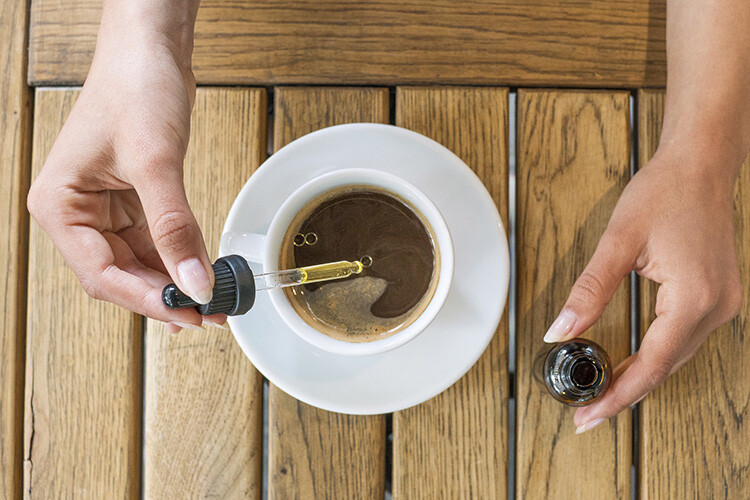
You can now consume CBD in many forms, and popular methods include CBD tinctures. Simply place it under your tongue, then swallow. Other popular strategies include utilizing topicals like lotions, balms, and creams. Additionally, specific CBD products can be smoked or vaped.
What are the Differences between Delta 8 and CBD?
While CBD offers numerous potential benefits, some users report feeling a lack of impact due to its non-psychoactive nature. Despite not producing a ‘high,’ CBD still interacts with the body’s systems in positive ways. In contrast, Delta-8 is a cannabinoid that can produce mild psychoactive effects while still offering many of the same potential advantages as CBD. Both Delta-8 and CBD are known to interact with cannabinoid receptors, leading to a range of similar effects.
Delta-8 has been shown to offer neuroprotective benefits, help alleviate pain, nausea, and inflammation, and may potentially assist with appetite. It can also help manage stress more mildly than Delta-9 THC. Therefore, Delta-8 can be an appealing choice for individuals seeking mild psychoactive effects coupled with benefits similar to CBD, but without the intensity of Delta-9 THC.
Are Delta 8 and CBD Legal to be Used?
The 2018 Farm Bill legalized hemp and hemp-derived products containing less than 0.3 percent Delta-9 THC. This legislation created a federal loophole for products containing higher amounts of Delta-8 THC, provided they are derived from hemp and contain no more than 0.3 percent Delta-9 THC by dry weight. However, Delta-8 THC does not naturally occur in significant quantities within hemp plants. This means that Delta-8 is typically synthesized from either CBD or Delta-9 THC.
How is Delta 8 Similar to CBD?
Both CBD and Delta-8 THC are cannabinoids that can be legally derived from hemp plants. However, Delta-8 is commonly produced by converting Delta-9 THC or CBD. Despite this, it differs significantly from CBD. Delta-8 THC possesses psychoactive properties, unlike CBD, which does not. CBD is the primary compound found in hemp with negligible psychoactive compounds.
Can you combine Delta 8 and CBD?
Delta-8 has less severe psychoactive consequences than Delta-9, but more pronounced than CBD. Combining Delta-8 with CBD can be an effective way to mitigate the psychoactive effects of Delta-8. When used together, Delta-8 and CBD can offer the benefits of both cannabinoids with potentially reduced or no ‘high-like’ effects. This is because CBD can interact with the same receptors as THC, modulating or ‘refuting’ the full activation of the receptor. This interaction allows Delta-8 to introduce its benefits to your body, while CBD helps reduce the psychoactive properties of Delta-8 THC and provides its own advantages.
Conclusion
While Delta-8 THC can serve as an alternative to Delta-9 THC, it is distinct from CBD. Both are cannabinoids, but they produce different effects on the body. Delta-8 THC induces psychoactive effects, whereas CBD does not. Additionally, Delta-8’s regulatory status is still evolving, and its legality varies by state. In contrast, the 2018 Farm Bill legalized hemp-derived CBD products under specific conditions. For safe and informed use of cannabinoids, always seek advice from a healthcare professional or expert. Prioritizing well-regulated options is advisable over products with unclear legal or safety profiles.