Tetrahydrocannabiphorol (THCP) is a cannabinoid that was only recently discovered in late 2019. Consequently, comprehensive reviews by regulatory authorities and extensive research on its safety and efficacy are still emerging. Early investigations, including both in vitro (cell culture) and in vivo (animal) studies, have begun to explore the potential effects and safety profile of THCP.
Like its well-known counterpart, Delta-9 THC, THCP exerts its psychoactive properties by interacting with the body’s endocannabinoid CB1 receptors. For those interested in exploring THCP, a variety of THCP products are available from online retailers.
Is Tetrahydrocannabiphorol Naturally Occurring and Legitimate?
Yes, THCP is a naturally occurring phytocannabinoid found in cannabis plants. Cannabis contains over 140 phytocannabinoids, including Tetrahydrocannabiphorol. However, the natural abundance of THCP is typically very low, often less than 0.1% of the plant’s total cannabinoid content. Certain unique strains, such as the FM2 strain cultivated in Italy, have been observed to exhibit THCP concentrations closer to 0.1%.
While THCP occurs naturally, its low concentration means that most commercial THCP products are derived through a process of synthesis or conversion from more abundant cannabinoids found in hemp. The legality of THCP often mirrors that of other hemp-derived cannabinoids, falling under the regulations established by the 2018 Farm Bill, which legalized hemp and its derivatives containing less than 0.3% Delta-9 THC. However, individual state laws regarding cannabis and its derivatives can vary significantly.
How is THCP Created?
Due to the scarcity of naturally occurring Tetrahydrocannabiphorol in cannabis, professionals often synthesize THCP in laboratories to achieve commercially viable concentrations. The process typically begins with cannabigerolic acid (CBGA), often referred to as the “mother cannabinoid.”
CBGA undergoes enzymatic reactions with specific precursor compounds within the plant to form tetrahydrocannabiphorolic acid (THCPA). THCPA is then converted into THCP through a process called decarboxylation, which involves heating to remove a carboxyl group.
Unlike Delta-9 THC, which is recognized internationally as a controlled substance under the Psychotropic Substances Convention, THCP derived from hemp plants (containing less than 0.3% Delta-9 THC) generally occupies a legal gray area in the United States. However, the regulatory landscape is complex and constantly evolving, with state-specific laws playing a crucial role in determining its legality and availability.
How Does THCP Differ from THC?
The primary structural difference between Delta-9 THC and THCP lies in their alkyl side chains. While Delta-9 THC possesses a five-carbon (pentyl) side chain, Tetrahydrocannabiphorol features a longer, seven-carbon (heptyl) side chain. This seemingly minor alteration has significant implications for its pharmacological activity.
This extended side chain allows THCP to bind more effectively and stably to the Cannabinoid Receptor Type 1 (CB1) in the endocannabinoid system compared to Delta-9 THC. This stronger binding affinity is believed to be responsible for THCP’s notably higher potency.
What Are the Effects of THCP?
Many users describe the effects of Tetrahydrocannabiphorol as a significantly intensified version of Delta-9 THC. While formal research on the precise psychoactive profile of THCP is still limited, anecdotal reports consistently suggest a more potent and profound experience compared to traditional THC products.
Although THCP and Delta-9 THC share many similarities in their effects due to their interaction with CB1 receptors, the key differentiation lies in THCP’s enhanced binding affinity. This means that THCP can produce a much stronger psychoactive response, even at lower doses. Consequently, users should exercise extreme caution and start with very low doses to mitigate potential adverse effects such as heightened anxiety, paranoia, or cognitive impairment, which can be more pronounced with potent cannabinoids.
How Does THCP Work in the Body?
THCP interacts with your body’s endocannabinoid system (ECS), a complex network of receptors and neurotransmitters that plays a role in regulating various physiological processes. The ECS comprises two main types of cannabinoid receptors: Cannabinoid Receptor Type 1 (CB1) and Cannabinoid Receptor Type 2 (CB2).
CB1 receptors are predominantly located in the central nervous system (brain and spinal cord) and are primarily responsible for the psychoactive effects associated with cannabinoids like Delta-9 THC and THCP. CB2 receptors are found mainly in the peripheral nervous system and immune cells, influencing inflammation and pain modulation.
Like Delta-9 THC, THCP acts as an agonist for these receptors, meaning it binds to them and activates them, thereby eliciting its effects. Its particularly strong affinity for CB1 receptors explains its potent psychoactive properties and its similar, yet intensified, pharmacological profile to Delta-9 THC.
How is THCP Consumed?
While the market for THCP products is still evolving, its method of consumption is largely similar to other cannabinoids. THCP can be incorporated into various delivery methods, including:
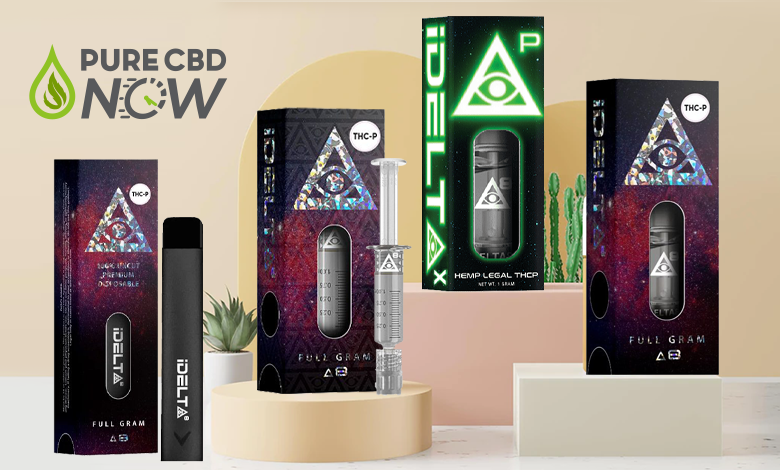
Vaping: Often found in vape cartridges or disposable pens, providing rapid onset of effects.
Edibles: Infused into gummies, chocolates, or other food items for a longer-lasting effect.
Tinctures/Oils: Consumed sublingually (under the tongue) for absorption through mucous membranes.
Topicals: Applied to the skin in creams or balms, primarily for localized effects rather than psychoactivity.
Most companies that produce cannabinoids currently offer THCP primarily in vape cartridges or other inhalable forms.
Does THCP Get You “Higher” Than THC?
Based on both its chemical structure and anecdotal evidence from users, THCP is widely reported to be significantly more psychoactive and potent than Delta-9 THC. While formal scientific studies are ongoing, the increased binding affinity of THCP to CB1 receptors strongly suggests a heightened psychotropic capacity.
Users frequently describe THCP as inducing a much stronger “high” or more pronounced psychoactive experience compared to an equivalent dose of traditional THC. This makes precise dosing crucial, as even small amounts of THCP can lead to intense effects.
THCP Compared to Other Cannabinoids
THCP stands out among other cannabinoids due to its exceptional potency. For instance, THCP is considered to be significantly more potent than Delta-8 THC, which itself is generally milder than Delta-9 THC. While the exact potency can vary based on individual physiology and product formulation, the effects of THCP can be remarkably powerful, potentially offering strong relief for issues like discomfort or sleep disturbances.
Unlike Delta-8 THC, which some users find to be less anxiety-inducing than Delta-9, THCP’s enhanced potency means that users must approach it with caution. The potential for discomfort or unwanted side effects may be higher if not dosed carefully.
While there’s ongoing speculation about a Delta-8 THCP isomer, research into how it might differ from Delta-9 THCP is still in its early stages. Similarly, refining extraction and synthesis processes to consistently differentiate and isolate specific THCP isomers like Delta-8 THCP versus Delta-9 THCP is a complex challenge within the cannabinoid industry.
Where to Buy THCP Products?
For those looking to explore the effects of this potent cannabinoid, a variety of top-of-the-line THCP-based formulations and delivery methods are available. Leveraging cannabinoids like CBD and Delta-8 THC as starting materials, advanced synthesis techniques allow for the creation of this powerful compound. You can explore an extensive collection of THCP products at Pure CBD Now.